The Local SEO and GEO Tools Service Businesses Actually Need
A practical stack for Google Business Profile, the local pack, citations, organic search, and AI recommendations, with one dedicated product for reviews.

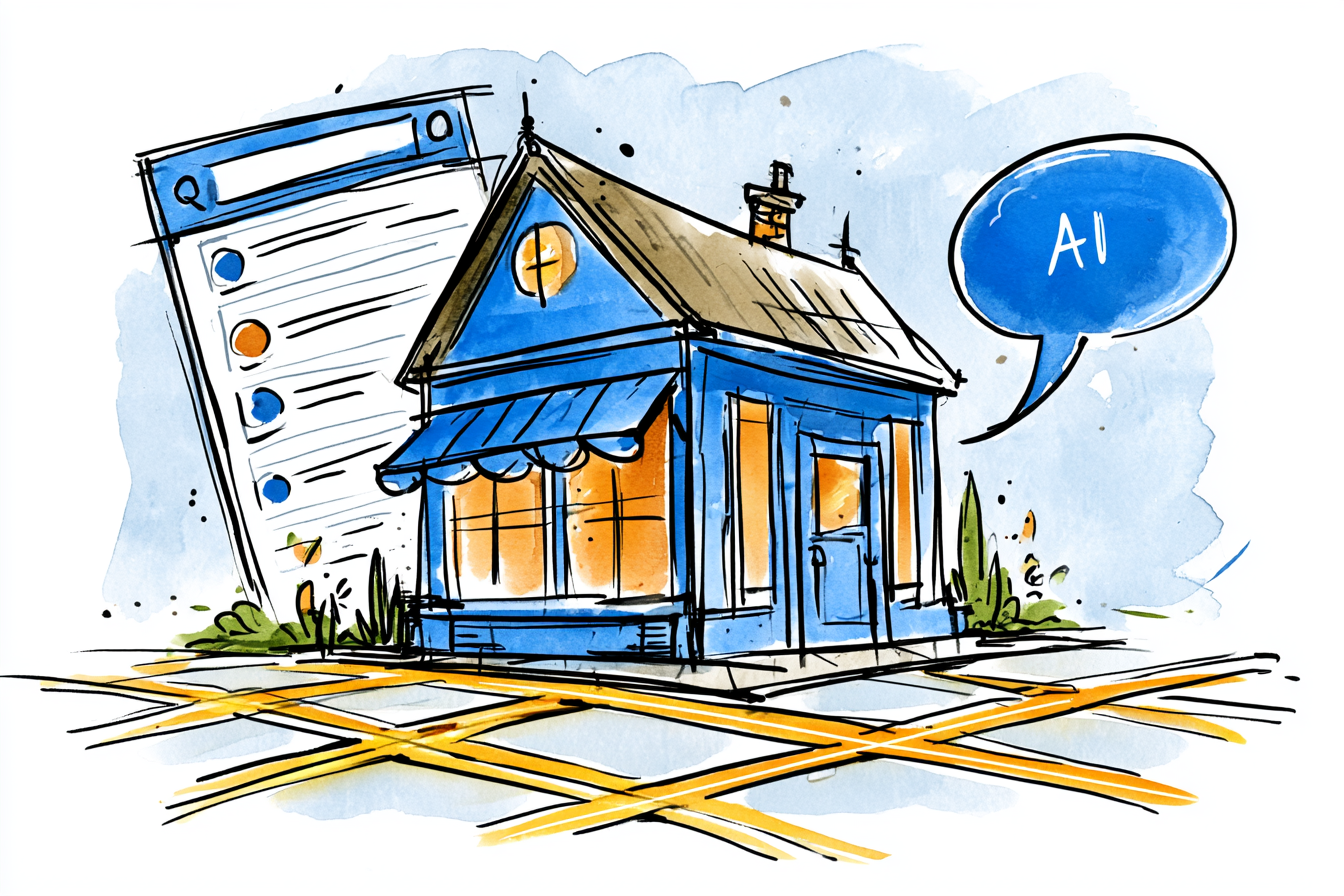
If you search for the best local SEO tools, you'll get a pile of all-in-one platforms that promise rankings, listings, citations, and reviews in one login. For a plumber, dentist, HVAC company, or any other local service business, that usually means you pay for three review products you'll never open, and you still can't tell whether you show up in the local pack when someone searches "emergency plumber near me" from the other side of town.
Local search in 2026 is two jobs. Local SEO is Google Business Profile, Google Maps, the map pack, citations, and the organic results under them. GEO, or generative engine optimization, is whether ChatGPT, Google AI Overviews, Perplexity, and Gemini name you when a customer asks for a recommendation instead of scrolling ten blue links. You need a small stack that covers both, and you need one product that actually does the review work.
The split is already measurable. Whitespark's study of local queries (May 2025, still the figure 2026 roundups use) found AI Overviews on 68% of local-business-type searches versus a local pack on 39%. Intent is what decides it: the pack still dominates "plumber in Phoenix" searches, while informational and hybrid queries ("cost of a furnace replacement") almost always get an Overview. BrightLocal's 2026 consumer survey found 45% of US adults had used AI for a local recommendation in the past year. You still have to win Maps. You also have to be nameable when someone asks ChatGPT who to call.
Here's the set worth putting in front of a local service business. Nothing here is an all-in-one suite. Each tool has one job.
Start with Google Business Profile, not another dashboard
Your Google Business Profile is still the foundation of local SEO. It's how you appear in Google Maps, the local pack, and a growing share of "near me" searches. Categories, service areas, hours, photos, Q&A, Google Posts, and the services list are ranking and conversion inputs, not decorations. If those are wrong, no paid tool will save you.
Treat the free Google Business Profile dashboard as a weekly habit. Confirm the primary category is the one customers actually search. Keep NAP (name, address, phone) identical everywhere else you are listed. For service area businesses that don't want a public street address, set the service area cleanly instead of faking a storefront. This is the cheapest local SEO work you'll ever do, and it is the work most shops skip for months at a time.
See the map pack the way a customer three streets over sees it
A rank you check from the office isn't the rank a customer sees from their driveway. Google Maps and the local pack change street by street, which is why a single "city-level" ranking is almost useless for a local service business.
Local Falcon is the tool built for that problem. It runs geo-grid scans across your service area and turns Google Maps visibility into a heatmap, so you can see where you own the map pack and where a competitor three zip codes over is beating you. Plans start around $25 a month, and you pay in credits rather than per keyword, which is the model that actually fits a shop tracking a handful of high-intent terms like "water heater repair" or "emergency dentist."
Local Falcon also applies the same grid idea to AI search, so you can see whether ChatGPT, Gemini, Google AI Overviews, and Google AI Mode mention you in one neighborhood and ignore you in the next. That's GEO measurement for a service area, not a national brand tracking "best CRM." Use it for Maps and AI visibility. Leave reviews out of it.
Citations and NAP consistency still move local rankings
A citation is any online mention of your business name, address, and phone number: directories, chambers, industry sites, local news, "best of" lists. Inconsistent NAP is still one of the fastest ways to confuse Google and to look untrustworthy to AI engines that assemble a picture of you from the open web.
Whitespark's Local Citation Finder is still the citation tool local SEOs actually use. It compares your listings against the businesses ranking above you and shows the directories and unstructured mentions you are missing, including niche sites a generic submission service will never find. Whitespark's 2026 Local Search Ranking Factors report is the survey practitioners cite for the local pack, and it now scores AI search separately. The AI column is led by expert "best of" lists, dedicated service pages, industry-domain mentions, and unstructured citations. Mentions are doing for GEO what links did for old-school SEO.
Build the high-value citations. Fix the duplicates. Then stop. A local service business doesn't need 400 directory listings. It needs a clean, consistent presence on the sites Google and AI engines already trust in that city and trade.
Traditional SEO is how you win the rest of the SERP
The local pack isn't the whole page. Organic results, location pages, service pages, and local links still decide who shows up when someone searches "how much does a furnace replacement cost" or "family dentist in [city]" without a map intent.
This is where a real SEO platform earns its keep. Ahrefs is the usual pick: keyword research for those service and city pages, a site audit for the technical issues that bury a small business site, and backlink data so you can tell a real local link (the chamber, a supplier, a news mention) from junk. You don't need the enterprise plan. You need a short list of money keywords, a site that loads and has LocalBusiness structured data, and a few links from places that already describe businesses like yours.
Put Google's Rich Results Test on that same checklist. LocalBusiness schema won't rank you by itself. Missing or broken structured data will keep Google and AI crawlers guessing about your hours, service area, and entity, which is a dumb way to lose visibility you already earned.
Measure the website, not just the maps pin
Google Search Console is free, and it is the only honest view of how your site performs in organic search. You'll see which queries already bring impressions, which service pages get clicks, and which ones Google has indexed but refuses to trust. Pair it with Google Analytics if you want to know whether those clicks become calls and form fills.
For online marketing in a local service business, this is the difference between guessing and running a campaign. Search Console tells you the "near me" and city-plus-service terms you already almost rank for. Those are the pages to improve before you buy another tool.
Reviews belong in one product, not five
Every all-in-one local SEO suite will try to own this part of the stack. That's how you end up with a rank tracker that also wants to send review requests, a citation tool with a reputation add-on, and a CRM that treats reviews as module number forty-seven.
Reviews are a local ranking signal and a GEO signal. Volume, recency, star rating, review responses, and the actual language customers use all show up in how Google and AI engines decide who to recommend. BrightLocal's same 2026 survey found that people who use AI for local picks still check real reviews before they call. That's exactly why the work should live in a product built for it, not as a checkbox inside a keyword tool.
More Good Reviews is the review product in this stack. It automates email and SMS review requests after the job, routes people to Google, Facebook, and the other sites that matter, drafts replies, and keeps the cadence steady enough that you get velocity instead of a one-week burst. It's built for local service businesses, not for an enterprise that needs social listening in the same tab.
Use Local Falcon to see if you appear. Use Whitespark and Ahrefs to make the rest of the local SEO case. Use More Good Reviews to keep the review profile alive. Don't buy a second review platform because it came bundled with a heatmap.
The bottom line
A local service business doesn't need a twenty-tool online marketing stack. It needs a complete Google Business Profile, a way to see the local pack and AI answers across the service area, clean citations, a real SEO and Search Console practice, and one review system that asks every customer, every time.
That's local SEO and GEO in practice: show up on Maps, show up in organic search, show up when someone asks an AI who to call, and keep the proof coming in the form of real, recent reviews. More Good Reviews is the piece that makes the last part automatic. The rest of the stack is there so those reviews have somewhere visible to work.